

Professional surfers use them to simulate ocean swells in their living rooms. Physical therapists swear by them for rehabilitation that actually sticks. That friend who never seems to trip over anything, effortlessly navigating icy sidewalks while you're doing the penguin shuffle? They probably have one hidden in their closet.
Balance boards transform the simple act of standing into a complex dance of micro-adjustments that strengthens everything from your ankles to your attention span. What looks like child's play from the outside is actually your nervous system conducting a full orchestra, your brain rapidly firing signals to hundreds of stabilizing muscles, your feet making constant tiny corrections, and your core working overtime to keep you upright.
Unlike traditional workouts that isolate muscle groups, balance training creates a conversation between your entire kinetic chain. Every wobble becomes a teaching moment, every successful hold a small victory that builds both physical strength and mental focus.
Why Use a Balance Board?
Your body makes thousands of micro-adjustments every second without you realizing—until the floor starts moving. A balance board removes the comfort of stable ground, forcing your muscles to work together to keep you upright.
-
Rehabilitation & Injury Prevention: Most injuries happen in split-second moments when your body can’t react fast enough. Balance board training builds reaction speed and stability, reducing the risk of ankle twists, back strain, or knee issues.
-
Athletic Performance Boost: Athletes need more than raw strength—they need control while moving, changing direction, and reacting. Balance boards train those “in-between” moments that separate good from great.
-
Posture Reset: Sitting for hours creates hunched shoulders and weak glutes. Balance boards wake up postural muscles, helping your body align naturally without constant reminders.
-
Joint Stability & Strength: Dynamic stability means being strong through full motion while adapting instantly. Balance boards help your joints become resilient and responsive.
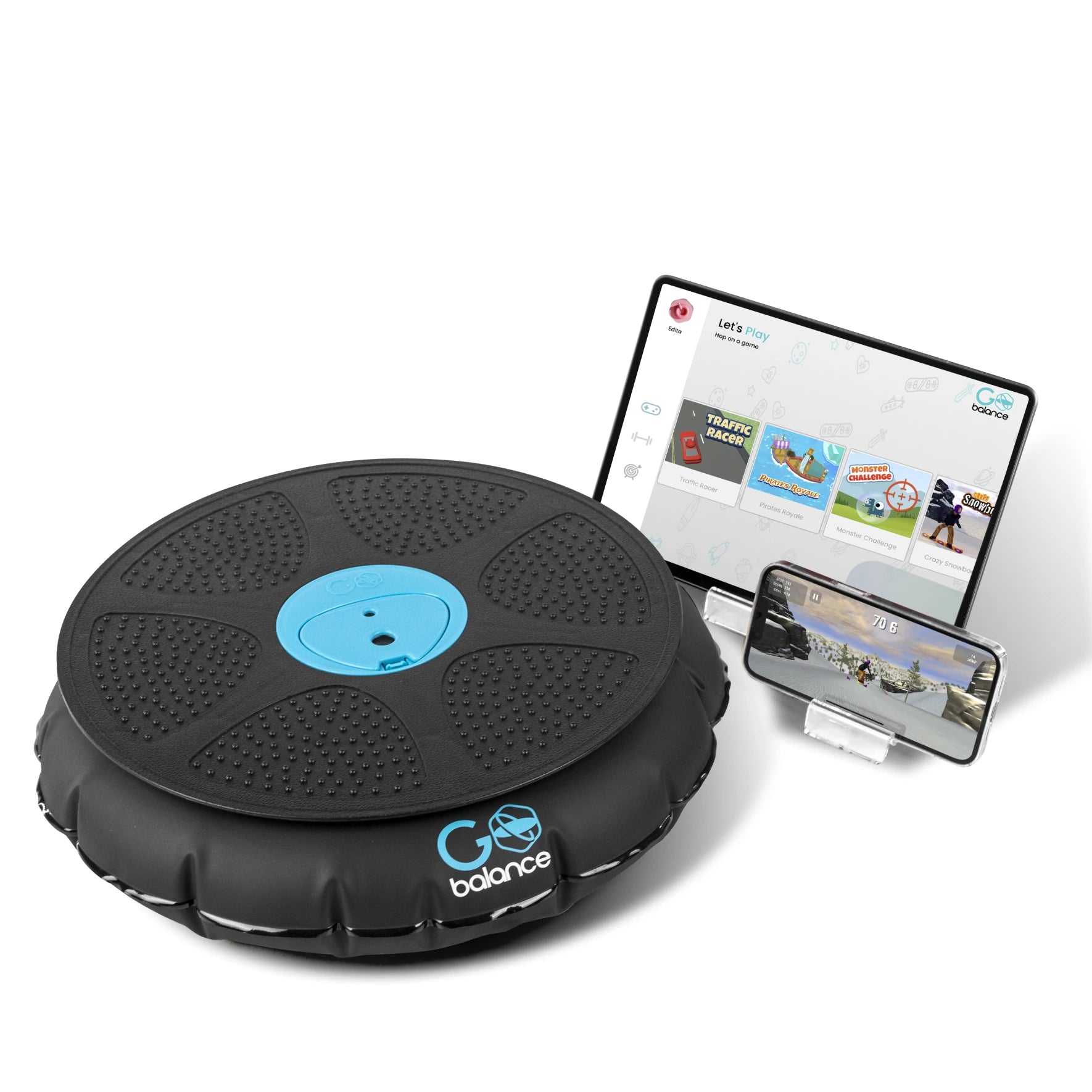
Whether you're training for performance, recovery, or everyday posture, the right tool makes all the difference. You can try GoBalance if you're looking for something that supports these goals. It adds an extra edge thanks to its unique training features, but more on that later.
6 Essential Balance Board Exercises
These exercises progress from "okay, I can handle this" to "why is standing so complicated?" Each one targets different aspects of your stability system while keeping things interesting enough that you'll actually want to come back for more.
1. Basic Rock and Roll
This is your gateway drug to balance training, deceptively simple yet surprisingly revealing.
-
Setup: Stand with feet shoulder-width apart. Let the board tip slowly from side to side, almost like you’re riding gentle ocean swells.
-
Goal: The aim isn’t to fight the movement but to control it—finding that sweet spot where you’re directing the rock instead of being at its mercy.
Start small: Begin with 30-second holds, focusing on smooth, deliberate shifts. You’ll quickly discover which direction feels natural and which makes you feel like you’re learning to walk again. That’s your body’s way of showing you its imbalances.
Why it matters: Most people unknowingly favor their dominant side or carry tightness in the hip flexors from sitting. These habits create predictable wobble patterns—think of them as your body’s report card.
Level up: Once you’re comfortable, try closing your eyes for 10–15 seconds. Suddenly, what once felt manageable turns into a neurological puzzle, as your brain scrambles to balance using only cues from your inner ear and proprioceptors. It’s humbling, but also one of the most effective drills you can do.
2. Squats on the Board
If regular squats are a conversation with your quads and glutes, board squats are a full-scale diplomatic negotiation involving every stabilizing muscle from your toes to your neck.
-
Setup: Stand on the board with feet shoulder-width apart. Sink into a squat while keeping the board as steady as possible.
-
Goal: Slow down and feel the movement—on a board, poor form simply won’t fly.
Start small: Begin with partial squats, about 45 degrees, until your body figures out how to coordinate the descent and ascent while managing the board’s movement. Your ankles will be working overtime with micro-adjustments, while your core learns to brace in a new way. Many discover they’ve been relying on momentum rather than strength in regular squats.
Why it matters: The beauty of board squats is their self-correcting nature. Lean too far forward, and the board tips. Favor one leg, and you’ll feel the imbalance instantly. It’s like training with a brutally honest coach who won’t let you cheat.
Level up: Aim for 8–12 slow, controlled reps. Focus on sitting back into your hips rather than dropping straight down, letting the board train your stability with every rep.
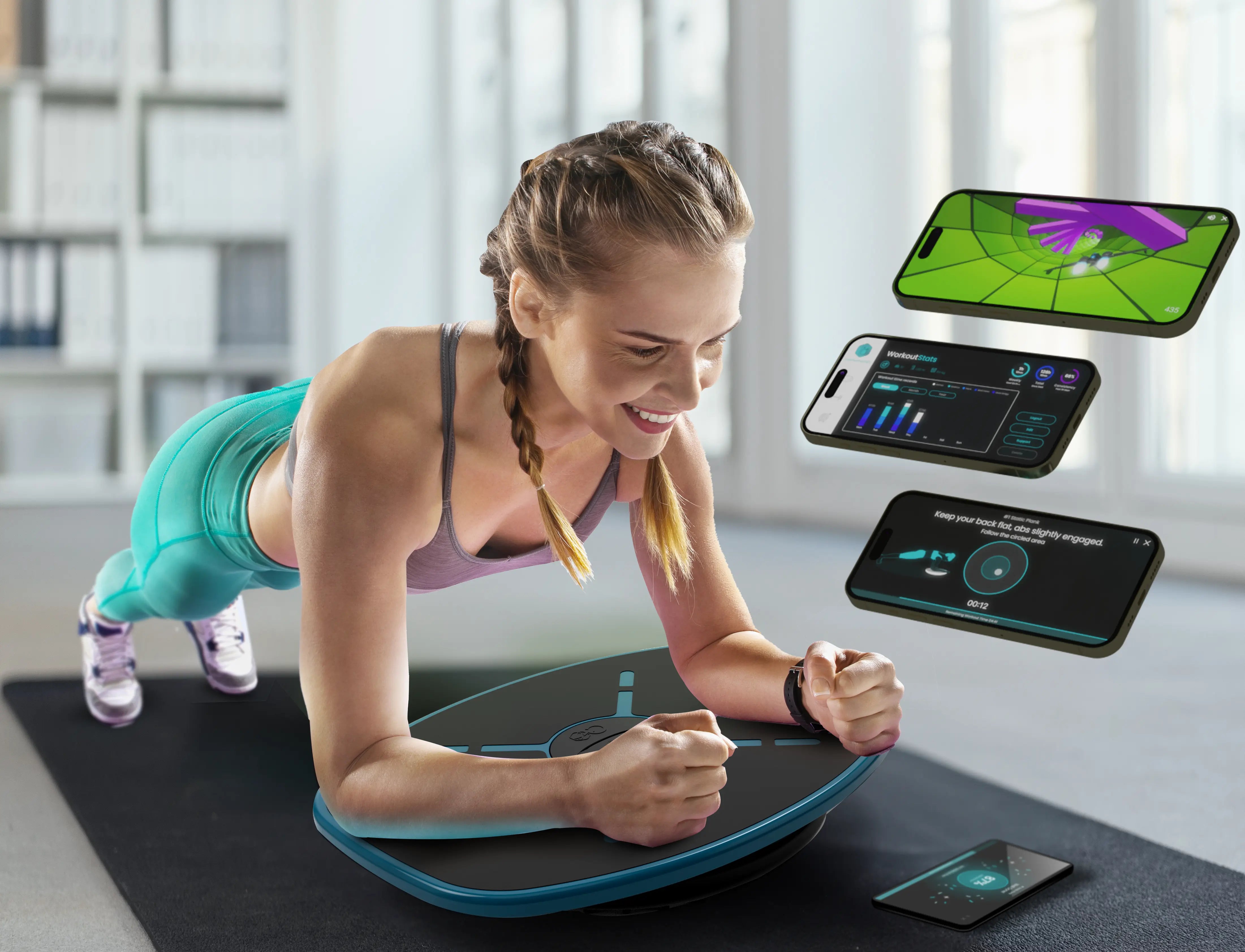
3. Plank Balance Holds
Traditional planks teach you to be rigid; balance board planks teach you to be strong while adapting.
-
Setup: Place your forearms on the board in a plank position, keeping your body in a straight line from head to heels.
-
Goal: Control the board’s movement as every tiny weight shift gets amplified, forcing your shoulders, core, and legs to constantly communicate and adjust.
Start small: Begin with 15–20 second holds. The board will naturally want to tip toward your dominant side, since most people unknowingly shift more weight to their stronger arm or shoulder. Resisting this teaches true bilateral stability.
Why it matters: This movement forces your deep core muscles, often ignored in traditional planks, to fire up and prevent your spine from collapsing like a wet noodle. The challenge isn’t only muscular, it’s neurological, as your brain works overtime to process balance cues while keeping you steady.
Level up: Gradually build to 45-second holds as your nervous system adapts. You’ll develop a rare combination of strength, coordination, and balance in one deceptively simple position.
4. Single-Leg Stands
This is where balance boards separate the confident from the cocky. Lifting one foot on an unstable surface turns your supporting leg into a precision balancing system.
-
Setup: Stand on the board, lift one foot slightly off the surface, and hold.
-
Goal: Keep the board steady as your ankle, knee, and hip work together—often through plenty of wobbling at first.
Start small: Begin with 15-second holds per leg, using a wall for light support if needed. Your supporting ankle will make hundreds of micro-adjustments each minute, not just building strength but also improving movement patterns for real-life activities like hiking, sports, or simply walking with more stability.
Why it matters: The lifted leg isn’t passive—its position affects your center of gravity and balance strategy. Many people discover big differences between legs, exposing imbalances that could affect performance or raise injury risk.
Level up: Once steady, add small movements with the lifted leg—gentle knee lifts or leg extensions—to challenge your stability and train functional coordination.
5. Push-Ups with Instability
Regular push-ups work your chest, shoulders, and triceps. Balance board push-ups work those muscles while engaging every stabilizer in your body.
-
Setup: Place your hands on the balance board in a push-up position. Grip firmly and keep your body in a straight line.
-
Goal: Maintain stability as the board shifts, forcing your upper body and core to coordinate under constant micro-adjustments.
Start small: Begin with knee push-ups if needed, focusing on controlled movement over speed. Each rep becomes a mini problem-solving exercise—your body must generate force while staying balanced.
Why it matters: The instability prevents mindless repetitions and makes your core work harder, not just to prevent sagging but to keep you aligned as the board moves. The board will naturally tip toward your stronger side, revealing imbalances in your upper body strength and coordination.
Level up: Work up to 8–10 slow, deliberate reps. Treat each push-up as its own challenge rather than rushing through the set.
6. Lunges with Front Foot on Board
Lunges already demand coordination, strength, and balance. Add a balance board under your front foot, and every stabilizing system in your body kicks into overdrive.
-
Setup: Place your front foot on the balance board, back foot on the ground, and prepare for a controlled lunge.
-
Goal: Stabilize through your front leg while your back leg adapts to the constantly shifting surface.
Start small: Begin with shallow lunges, pausing at the bottom for 2–3 seconds to let your nervous system organize the movement. The board will quickly expose any tendency to favor one side or compensate with poor alignment.
Why it matters: This variation mimics real-world challenges like stepping onto uneven terrain or navigating obstacles. Your core works differently than in regular lunges, maintaining alignment while managing rotational forces from the unstable surface.
Level up: Once steady, try reverse lunges—stepping back from the board—to challenge your balance in a completely new way.
If keeping track of all these exercises feels overwhelming, GoBalance has you covered. Its built-in library shows you exactly what to do, with guided routines you can follow in real time. That means no memorizing, no second-guessing, just step on, follow the prompts, and let the board walk you through every move.
GoBalance Makes Balance Training Easy, Guided, and Effective
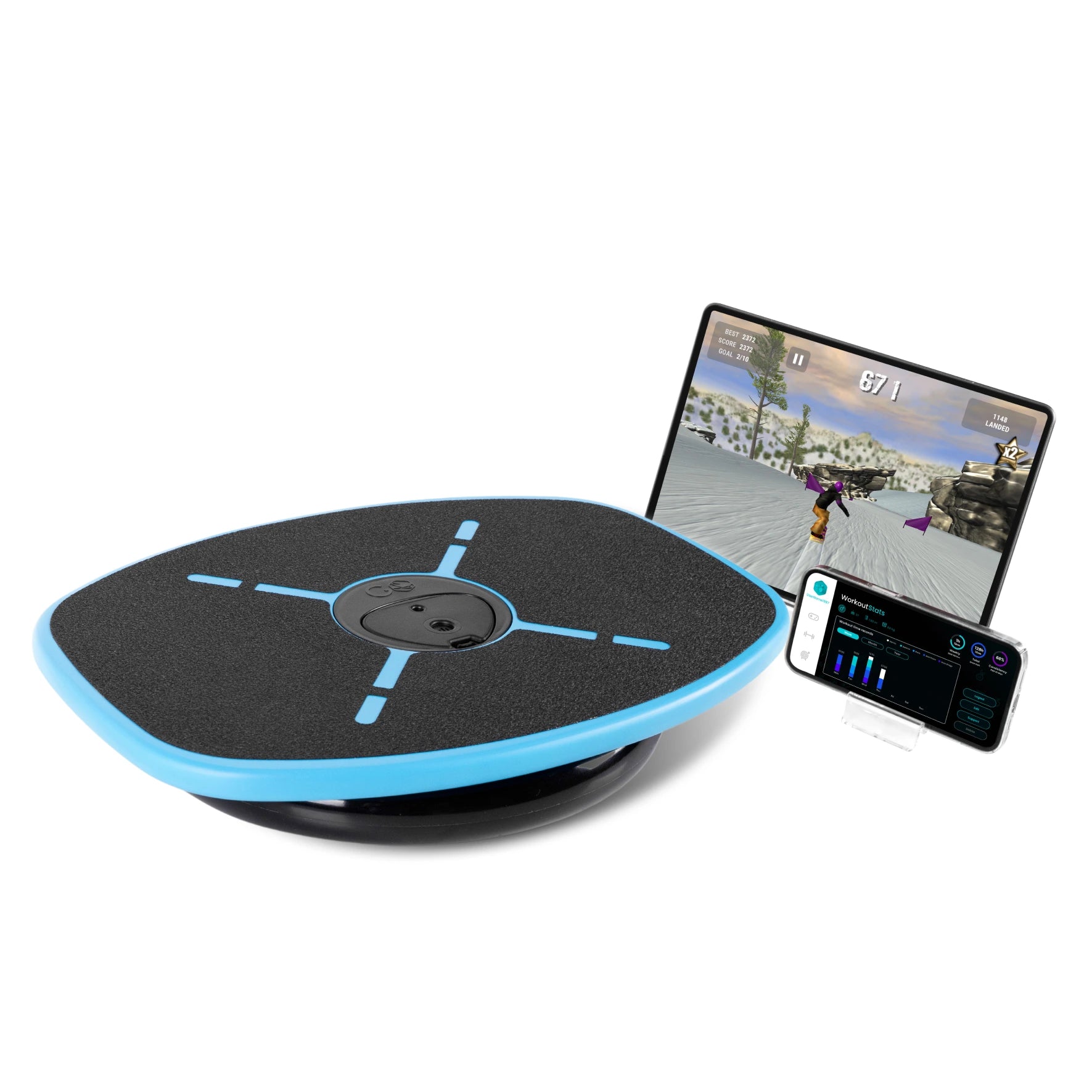
A traditional balance board is just a piece of wood on a roller; you step on it, wobble around, and hope you’re improving. GoBalance is different. From the moment you pair the board with its dedicated app, your training stops being guesswork and becomes a measurable, genuinely fun, and interactive.
And speaking of which, what makes GoBalance truly interactive is how it connects with your devices. Pair it with your phone, tablet, or even mirror it to your TV, and the app becomes your personal trainer. It guides you through each exercise, shows you exactly what to do, and keeps you on track as if a coach were right there beside you.
GoBalance combines the physical challenge of a real balance board with the engagement of a game. As you train, the app tracks your movements in real time, giving you instant feedback on stability, control, and progress. For example, you can choose goal‑based plans and track completion with weekly milestones, keeping your training structured and motivating. You’re not just standing and shifting, you’re actively playing, following guided workouts, and working toward in-app goals that keep you motivated since the workouts adapt to your level, escalating difficulty as your control improves, so you’re always challenged, but never overwhelmed.
This isn’t just about fitness, it’s about variety. The app offers exercises and games for all skill levels, from beginners who need step-by-step guidance to advanced users who want tougher challenges. Because you’re focused on the games, you often end up training longer than you would on a plain board, which means faster progress without feeling like you’re “working out.”
Another big advantage is the versatility. GoBalance is as effective for athletes looking to sharpen coordination as it is for people recovering from injuries or simply trying to improve core strength and posture. The guided programs make it approachable, while the gaming aspect keeps it exciting for kids and adults alike.
And here’s something you can’t get from a standard board: physical activity and entertainment at the same time. You’re not just improving balance, you’re having fun, staying engaged, and seeing your improvement over time, all while moving your body in ways that strengthen muscles you use every day.
If you want a piece of equipment that challenges your body, engages your mind, and keeps you coming back for more, GoBalance outclasses a regular balance board in every way.
Final Thoughts
Balance board exercises aren't just trendy, they're a practical way to build core stability, reduce injury risk, and enhance overall athletic ability. With consistency, you'll feel more agile, centered, and confident in daily movements and sports alike.
What makes balance training so effective is its ability to strengthen the often-overlooked stabilizing muscles while improving the crucial mind-body connection that keeps you upright and coordinated. These aren't just gym benefits, they translate directly to real-world situations like navigating icy sidewalks, hiking uneven trails, or simply moving through your day with greater ease and confidence.
Your future self, more stable, stronger, and moving with quiet confidence, will thank you for starting today.